Te Tuku o Tutepourangi
The tuku
Ngāti Koata oral tradition tells us that the tuku (a ceding of land and mana) began at Anatoto, at the mouth of Te Hoiere (Pelorus Sound). This included places like Kurupongi, Ngā Kiore, Takapourewa, and stretched all the way to Onetahua (Farewell Spit). The tuku was made by Tūtepourangi as he had no other choice. His people were facing defeat, and to protect them, he ceded authority and land to Ngāti Koata.
After this, Ngāti Koata moved into Te Hoiere and nearby areas, living on the land, caring for it, and keeping their fires burning (ahi kā). Their whakapapa became part of these places.
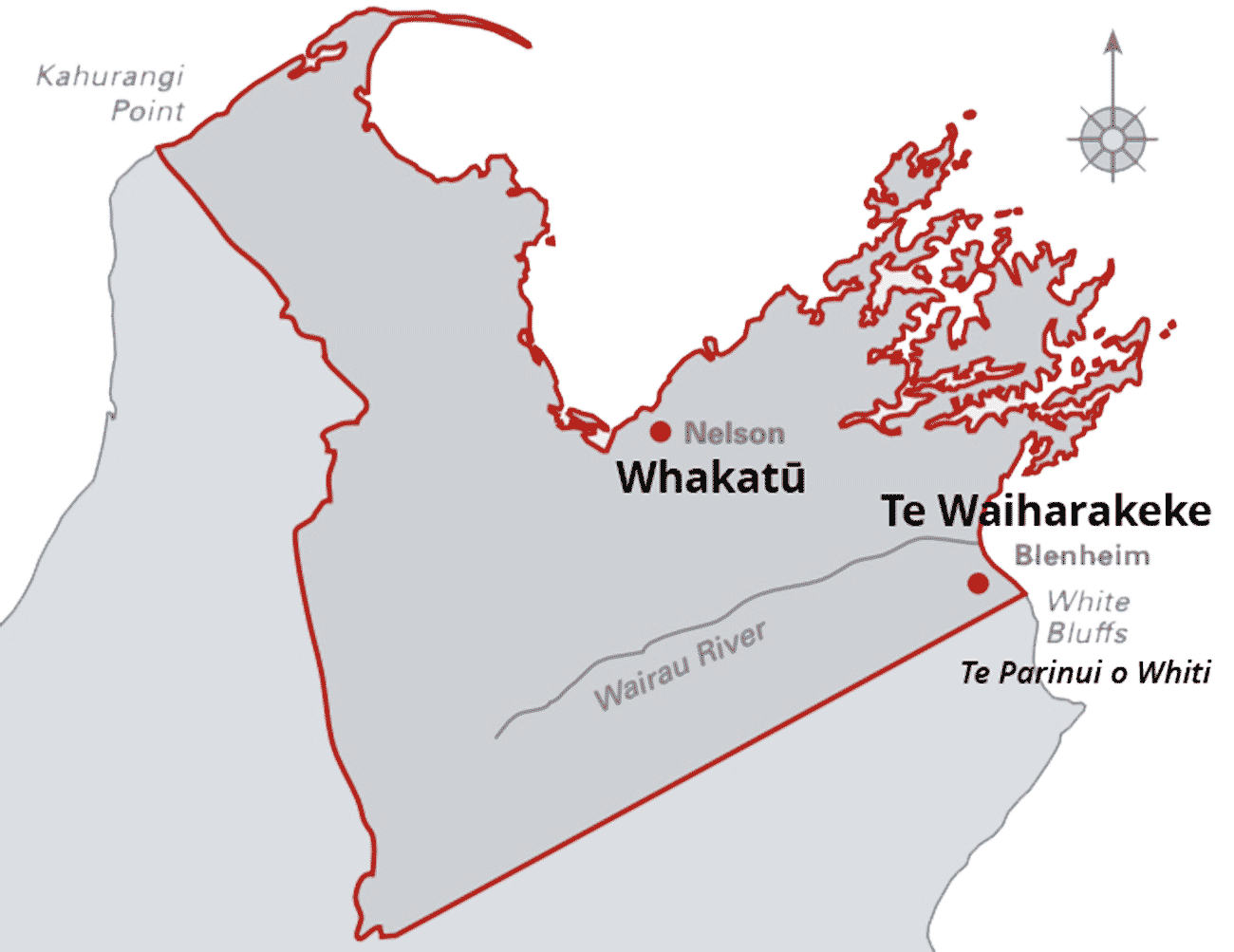
Today, the courts recognise this tuku in legal terms. The rohe (tribal area) of Ngāti Koata includes all of the land and sea from Anatoto and the Sounds, down the coast from Kaiaua (Croisilles Harbour) to Cape Soucis, and across to Whangamoa, Whakapuaka, Whakatū, Waimea, Motueka, and Te Matau.
Sealing the tuku
One of the ways the tuku was made official was through takahia te whenua, walking across and stepping onto the land. This showed that Ngāti Koata now held the rights of mana whenua, to live there and care for it.
Ngāti Koata also began building relationships with the iwi and hapū already living in these areas. Tomo (arranged marriages) were formed between high-ranking Ngāti Kuia women and Ngāti Koata rangatira such as Te Putu, Te Whetu, and Tekateka.. These marriages were part of sealing the tuku and to further establish Ngāti Koata as mana whenua in Te Tauihu.
These lands and waters are not only legally recognised but spiritually and genealogically bound to Ngāti Koata through generations of occupation, stewardship, and leadership. Our connection to this rohe is affirmed through kōrero tuku iho, whakapapa, and continued presence.